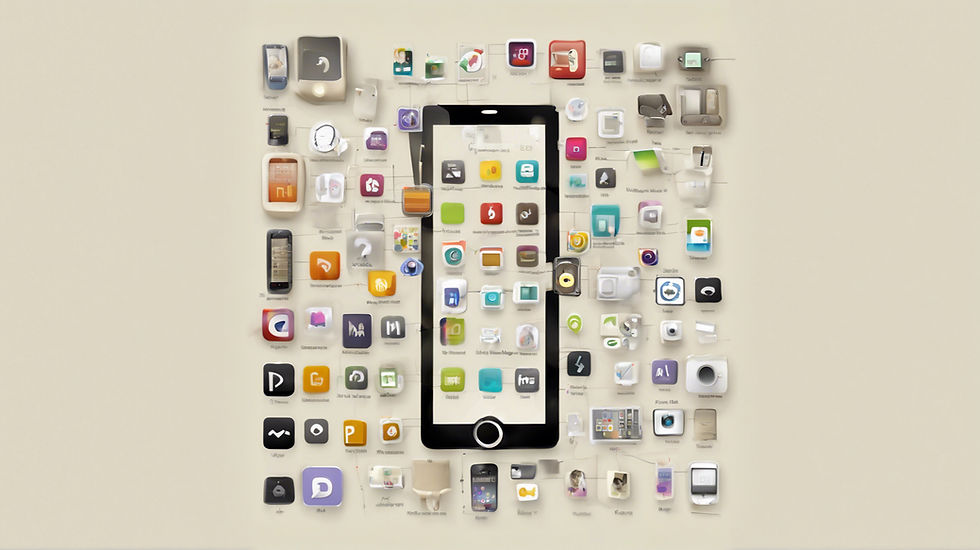
Too Many Apps, Too Little Time
Challenges and approaches to solutions
In today’s professional world, there is an app for everything—and for every app, at least five alternatives. Every month, over 1,000 new business tools are released; globally, there are now more than 150,000 solutions covering various processes along the value chain, from procurement to customer loyalty. What began as a digital blessing has become a problem for many companies: Tool Overload. More digital systems, yet less oversight.
*Sources: Atlassian / Freshworks / Productiv / TechCrunch / Statista
The Dark Side of the Tool Flood
Studies show that decision-makers spend an average of 40 to 80 hours per year searching for, evaluating, and implementing new tools. And that is just the tip of the iceberg. Incompatible software, redundant systems, interface issues, and a lack of user acceptance lead to hidden costs ranging between €10,000 and €50,000 per company annually—not to mention the frustration within the team.
Why Service Design is the Solution
In a world where digital tools have become critical infrastructure, we don't need more apps—we need better decisions. This is exactly where Service Design comes in. Unlike traditional IT consulting, Service Design does not focus on individual products, but on the system as a whole: processes, people, goals—and only then, the technology.
Today, numerous Canadian companies already benefit from close economic cooperation with Germany—for instance, in the sectors of energy, technology, aviation, and mobility.
The Goal
A curated, lean, and integrated tool landscape that is oriented toward real workflows—not marketing promises.
#1
Tool Audit Which systems are already in use, and how effectively are they being utilized?
#2
Value Chain Which specific steps in the company actually require digital support?
#3
Defining Goals
What does the company want to achieve—efficiency, scalability, or automation?
#4
Market Research & Curation
How can a Digital Officer strategically and independently select the right user-centered solution from over 150,000 tools?
#5
Integration Check
What can be cleanly integrated into existing systems? Which tools harmonize with one another?
#6
Leadership and Teams
How can transparent, compact overviews with concrete recommendations be designed as a basis for decision-making for leaders and teams—ready for immediate implementation?
#7
Piloting & User Testing
How can targeted piloting and user testing ensure that tools meet the actual requirements and needs of users in their daily work?
#8
Onboarding & Training
How can employees be engaged and empowered so that new digital solutions are successfully used and accepted in the long term?
#9
Monitoring & Optimization
How is the success of implemented tools secured long-term through continuous monitoring and targeted optimization?
#10
Governance & Strategy
How can digital governance be established to enable sustainable strategic development and prevent "tool sprawl" (wild growth) in the landscape?
How service design helps regain control in the digital tool jungle
December 20, 2025
Rosbeh Ghobarkar - Founder & Managing Director @spyke